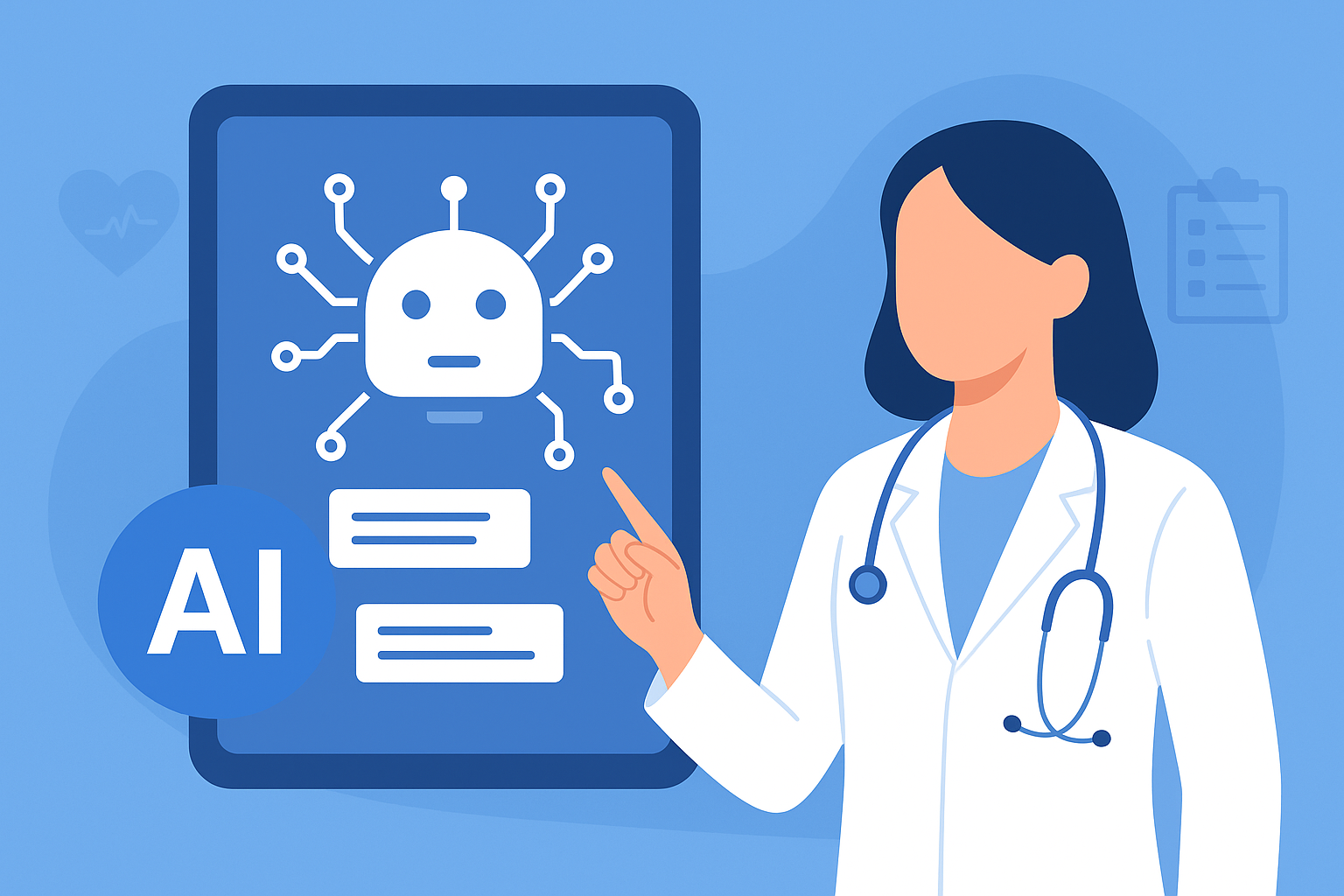
The modern medical clinic operates at a crossroads. On one path lies the relentless pressure of administrative overhead, compliance complexity and physician burnout. On the other, the promise of Artificial Intelligence (AI) to automate, personalize, and elevate patient care to unprecedented levels. The shift from manual, reactive systems to intelligent, proactive platforms is no longer optional; it’s an imperative for survival and growth.
AI is not here to replace the diagnostic genius of a clinician; it is here to be the ultimate support system, eliminating the mundane and illuminating the complex. By leveraging specialized AI software, clinics can drastically reduce the time spent on documentation, improve data accuracy, and, crucially, focus their expertise back on the patient.
This comprehensive guide explores the most impactful AI and software solutions for medical services, using NTSprint‘s Proof of Concept (POC) as a powerful case study for integrating cutting-edge technology into core clinical processes. We’ll detail some critical AI workflows that define the future of the intelligent clinic.
The Core Challenge: Bridging the Efficiency Gap
Healthcare clinics are wrestling with two major deficiencies that undermine efficiency and quality:
- Administrative Friction: Tasks like patient registration, managing appointments, and handling insurance are repetitive, error-prone, and constitute a massive administrative load. This friction leads to slower turnaround times and poorer staff experience.
- Data Isolation and Incompleteness: Patient data often exists in silos, paper forms, unformatted notes, and basic Electronic Health Records (EHRs). This fragmented information makes comprehensive risk assessment and evidence-based decision-making cumbersome and difficult.
The solution is not a generic software package, but a custom-built, AI-integrated system designed to automate critical processes, from appointment management to lab results, and ensure full interoperability with existing medical systems (EHR/HIS).
Case Study: NTSprint’s AI Integration POC for Clinical Management
NTSprint’s Proof of Concept (POC) focuses on validating the integration of AI technologies into key clinical processes, specifically designed to guarantee precision, traceability, and regulatory compliance. The POC’s scope encompasses the intelligent automation of crucial clinical and administrative components:
- Core Systems: Appointment and medical agenda management, patient registration, EHR/EMR, billing, insurance, lab and results handling, patient communication, and operational reporting.
- Integration: Full integration capabilities with existing medical systems (EHR/HIS) are central to the design.
This platform is characterized by critical, AI-powered workflows that fundamentally change how information is processed and utilized.
1. Automated Pre-Consultation (Auto-Report)
The first point of friction is the initial patient interview. The AI-integrated system flips this process from reactive to proactive:
| Feature | Value & Mechanism | Benefit |
| Guided Chat/Form | The patient receives a secure link or QR code pre-appointment to access an intelligent, AI-guided form. | Enhanced patient engagement and convenience. |
| NLP Medical Analysis | The AI’s Natural Language Processing (NLP) engine analyzes patient input on symptoms, medical history, and current medication. | Uniformity and quality of clinical data is improved. |
| Automated Summary | A structured clinical summary is generated and delivered to the physician before the consultation. | Saves time in the initial interview, allowing the physician to start the consult with complete context. |
This process is invaluable for specialized clinics, such as those focusing on occupational health. It ensures that occupational test plans or physical assessments are tailored not just to the job requirements, but to the individual’s full and pre-disclosed health profile, optimizing test relevance and resource use.
2. Clinical Support During Consultation
This flow directly combats physician burnout caused by charting:
- Real-Time Transcription: As the doctor speaks or dictates notes during the consultation, the AI uses voice recognition to transcribe the audio.
- Entity Identification: A clinical NLP engine identifies and extracts medical entities such as symptoms, diagnoses, treatments, and medications from the live dialogue.
- Structured Note Generation: The AI instantly generates a structured, editable clinical summary and can provide automatic suggestions for diagnosis or treatment. This reduces administrative documentation time while increasing the accuracy of medical records.
3. Post-Consultation/Post-Operative Follow-up
Care extends beyond the clinic visit. This flow ensures continuous monitoring without manual burden:
- Automated Messaging: The system sends proactive follow-up messages via WhatsApp, SMS, email, or a dedicated app.
- Natural Language Interpretation: An AI assistant interprets the patient’s natural language responses (e.g., “I feel less pain, but I had a slight fever this morning”).
- Risk Detection: It classifies relevant information (pain levels, adherence, and reactions) and automatically updates the clinical record or generates immediate alerts if a complication or risk is detected. This facilitates early detection of adverse events and improves patient adherence.
The AI Integration Framework: Security, Validation, and Evolution
The remaining four flows ensure the AI system is secure, compliant, integrated, and continuously improving.
4. Clinical Validation and Human Oversight (Human-in-the-Loop)
In healthcare, no AI output is final without human review. This flow ensures regulatory compliance and clinical confidence:
- Interactive Review: The physician reviews the AI-generated structured summary in an interactive panel.
- Correction and Confirmation: The doctor makes any necessary corrections or confirms the AI’s output.
- Final Archiving: The validated, final version is saved into the database or EHR system.
This “human-in-the-loop” process is paramount, guaranteeing that the professional’s judgment remains the final authority.
5. Seamless Integration with EHR/HIS Systems
Adopting new technology shouldn’t mean scrapping your existing infrastructure:
- Standardized Data: The AI generates clinical history data in a standard format, such as FHIR or HL7.
- Secure API Transmission: Data is securely transmitted via API to the clinic’s existing EHR or Hospital Information System (HIS).
- Interoperability: This guarantees interoperability and continuity of care, allowing the clinic to adopt the new AI capabilities without having to completely replace its current platforms.
6. Clinical Analytics and Insights
The true value of structuring unstructured data is the insights it unlocks:
- Pattern Recognition: The AI analytics module identifies patterns, correlations and trends across all collected data (by diagnosis, treatment, or specialty).
- Automated Reporting: Dashboards and reports are generated automatically.
- Evidence-Based Decisions: This provides management and clinical teams with powerful support for evidence-based decisions, allowing for resource optimization, cost control, and predictive analysis to improve service delivery and clinical outcomes.
7. Continuous Model Improvement
The AI system is built to learn and evolve:
- Supervised Training Data: Every time a physician corrects or validates an AI-generated note, that correction is stored as supervised training data.
- Periodic Retraining: The NLP model is periodically retrained using these real-world examples from the clinic.
- Contextual Accuracy: This cycle ensures the AI progressively increases its precision and contextual understanding, making it more reliable and specifically tailored to the clinic’s unique practice.
Security and Access: The Role-Based Authentication Standard
The POC’s design highlights the necessity of Role-Based Authentication (RBA) in any healthcare solution. RBA is a security pillar, ensuring that personnel only have access to the data required for their specific role, which is fundamental for compliance and data integrity.
- Employee/Patient View: Access limited to personal history, scheduled appointments, and test results.
- Doctor View: Full access to clinical data, AI-generated summaries, and the ability to edit/validate records.
- Management/Employer View (Occupational): Restricted access, potentially only to high-level operational reports or final occupational clearance status, strictly separated from sensitive patient details.
This granular control is not just good practice; it’s an absolute requirement for handling Protected Health Information (PHI).
Your Strategic Partner in HealthTech: NTSprint
Generic software will only lead to generic results. The future of medical service efficiency lies in custom-built, AI-integrated solutions that fit your specific clinical model, whether you are a specialized occupational clinic or a multi-disciplinary practice.
NTSprint is an expert technology partner dedicated to building robust, compliant, and scalable healthcare software, validated by the development of this sophisticated POC.
We offer two pathways to the intelligent clinic:
- Ground-Up Custom Development: We design and deploy bespoke AI platforms that integrate the seven critical workflows discussed above, giving your clinic a competitive advantage and optimized operations.
- AI Integration for Existing Systems: If your clinic already operates a system and owns the code, NTSprint can integrate powerful AI capabilities, such as ambient scribing, NLP-driven pre-consultation, and automated patient follow-up, directly into your current infrastructure. This allows you to modernize processes and gain AI functionality without discarding valuable prior investments.
To stay competitive, improve staff satisfaction, and deliver personalized care, a strategic partnership is essential.
Contact NTSprint today to discuss how a custom-engineered AI solution can transform your clinic’s operations and elevate the standard of patient care.